Exchange Gain from Transfer Out Example
Note: This example does not include amounts in organization currency. Exchange gains, exchange losses, and intercurrency balancing may also occur for organization currency amounts.
Your base currency is GBP. The ‘transfer in’ bank account currency is CAD. The ‘transfer out’ bank account’s currency is USD.
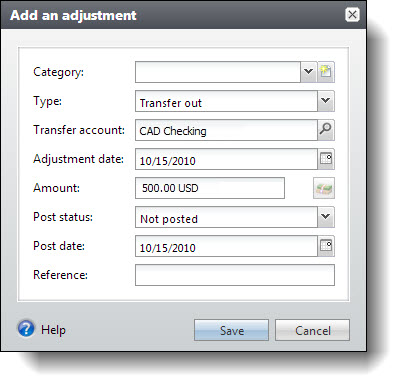
You create a transfer for 500 USD from your USD bank account to your CAD bank account.
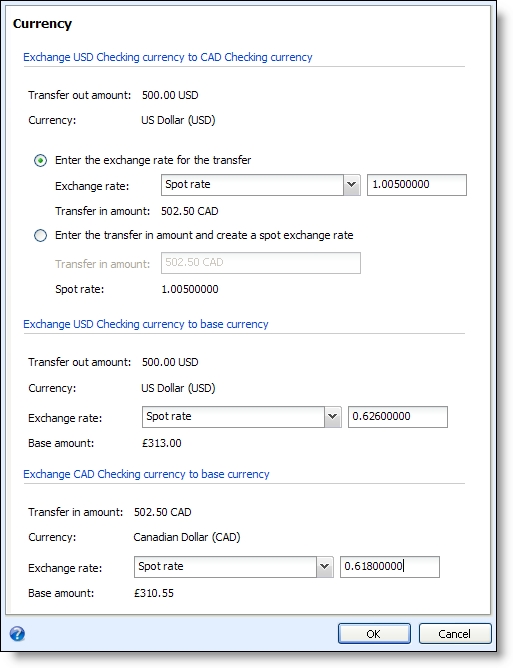
The exchange rate for USD to CAD is 1.005. The exchange rate for GBP to EUR is 1.220.
-
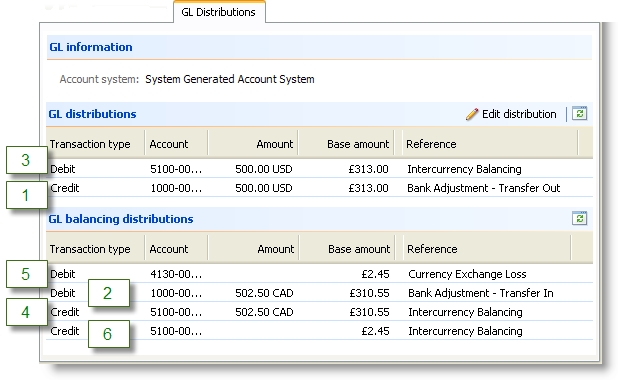
The program creates a credit of 500 USD to your USD bank account’s GL cash account. The base amount of the credit distribution is 313 GBP. This shows the transfer for the ‘transfer out’ account on the general ledger with the correct transaction amount and the resulting base amount.
-
The program creates a debit of 502.50 CAD to your CAD bank account’s GL cash account. The base amount of the debit distribution is 310.55 GBP. This is because the base currency is GBP and the exchange rate from CAD to GBP is 0.618. 502.50 * 0.618 = 310.55. This shows the transfer for the ‘transfer in’ account on the general ledger with the correct transaction amount, exchange rate, and base amount.
-
The program creates an intercurrency debit of 500 USD and a base amount of 313 GBP. This balances the credit to your USD bank account’s GL cash account.
-
The program creates an intercurrency credit of 502.50 CAD with an exchange rate of 0.618 and a base amount of 310.55 GBP. This offsets the debit to your CAD bank account’s GL cash account.
-
The program creates a debit exchange loss for 2.45 GBP in the base amount field that represents the exchange loss for the base amount. 313.00 - 310.55 = 2.45.
-
The program creates an intercurrency credit for 2.45 GBP in the base amount field. This corresponds to the exchange gain for the base amount. Alternatively, this balances the difference in base amounts for the other intercurrency distributions.