Add Form Fields with the Form Builder
Use the Form Builder to add fields that collect responses, display read-only information, and organize the applicant or grant manager experience. Selecting the right field type helps you capture consistent data and create forms that are easier to complete and review.
Note: If you want to add multiple fields quickly, use Quick Add.
Tip: For better readability and navigation, organize fields with layout components. For setup guidance, see Add Layout Components.
Use capture fields for information that applicants or grant managers need to enter. These fields are available in the Capture group of the Form Builder toolbox.
Applicant Responses (Applicant Forms Only)
-
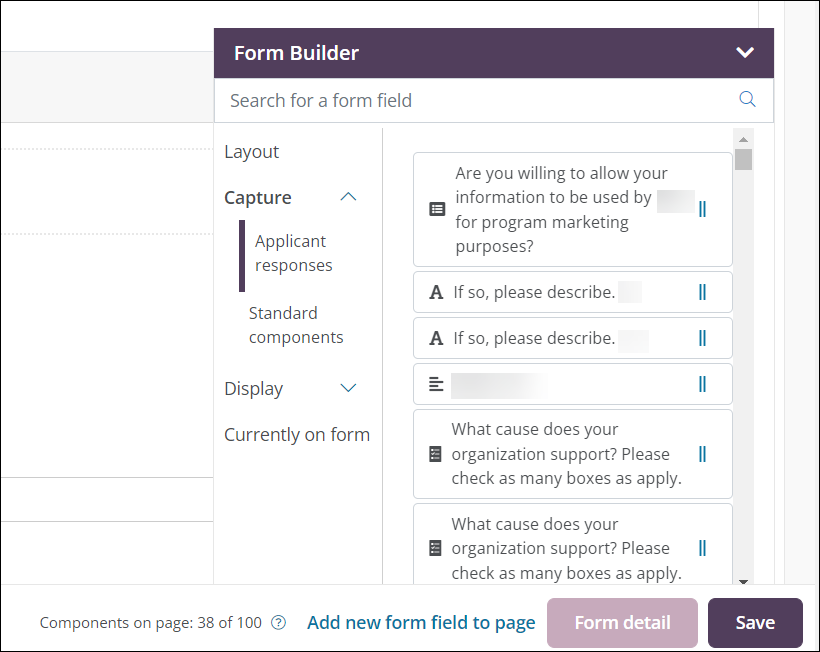
Open Capture > Applicant Responses in the Form Builder toolbox.
-
Drag the appropriate field type onto the form.
-
In the Configuration screen, define the field data and settings.
Note: Configuration options vary by field type. For more details, see Configure Forms and Form Fields.
-
Save your changes.
Standard Components
Use standard components for fields that are commonly used across programs. These fields integrate with standard product features such as reporting, so they are usually preferable to creating a custom field for the same purpose.
-
Open Capture > Standard Components in the Form Builder toolbox.

-
Drag the standard component onto the form.
Note: For a comparison of component availability in applicant and grant manager forms, see What standard components are available in Applicant forms versus Grant Manager forms?
-
Configure the field settings in the Configuration screen.
Note: Configuration options vary by component. For more details, see Configure Forms and Form Fields.
-
Save your changes.
Add Display fields
Use display fields for information that should appear on the form without requiring user entry. These fields are read-only and are available in the Display group of the Form Builder toolbox.
Custom Text
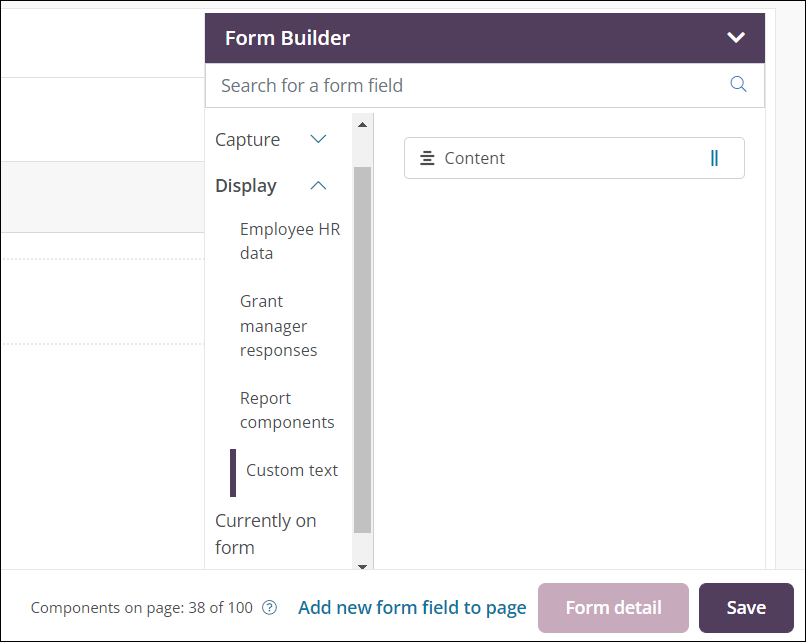
The Content field in Display > Custom Text lets you add text and images such as instructions, section headers, policy text, and introductory content.
Note: This field is display only and does not capture new information.
-
Open Display > Custom Text in the Form Builder toolbox.
-
Drag the Content field onto the form.
-
In the Configuration screen, enter and format the content you want to display.
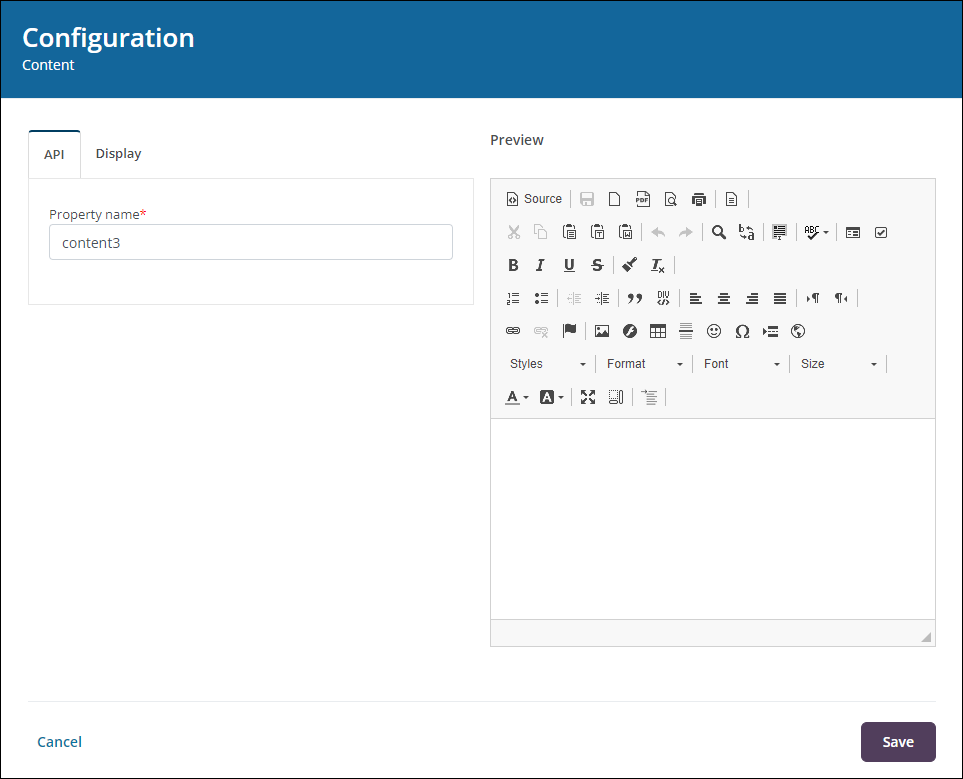
Note: Use this area to explain the information being collected and, when needed, include links to resources such as privacy policies.
Note: You can also control when the content appears from the Display tab. For more information, see Show or Hide Fields.
-
Save your changes.
What standard components are available in Applicant forms versus Grant Manager forms?
| Standard Component | Availability |
|---|---|
| Alternate Address | Applicant and Grant Manager |
| Attention | Applicant and Grant Manager |
| Cash Amount Requested | Applicant and Grant Manager |
| Designation | Applicant and Grant Manager |
| In Kind Amount Requested | Applicant and Grant Manager |
Note: For more information about each field type, see Standard Components.
What is the difference between Contact Email Address and Affiliation Email?
In the contact tables of the Form Builder, Affiliation Email applies to the contact’s relationship to the organization or request. If no affiliation email is specified, the system defaults to the contact’s main email address.
If you remove the affiliation email field and then reseed the contact tables, the field is removed from those tables.